Meta Ads Attribution Update: How the New Click-Through Definition Changes Performance Reporting

The Growing Need for Transparent Attribution in Digital Advertising
Attribution has always been one of the most debated topics in digital marketing. Leaders rely on platform reporting to understand performance, allocate budgets, and defend investments internally. Yet for years, the numbers in ad platforms have often told a different story from what analytics tools or internal reporting suggested.
Meta’s latest attribution update is a meaningful step toward addressing that disconnect. By redefining what qualifies as a “click-through” conversion and introducing a clearer category for engagement-based interactions, Meta is moving toward more transparent measurement.
For marketing leaders responsible for growth and profitability, this update is not just a technical adjustment inside Ads Manager. It affects how performance is interpreted, how channels are valued, and ultimately how marketing investment decisions are made.
What Changed in Meta Attribution? Breaking Down the New Click-Through and Engage-Through Metrics
Meta has introduced two important changes that clarify how conversions are attributed.
Meta’s New Click-Through Attribution: What Counts as a Real Click
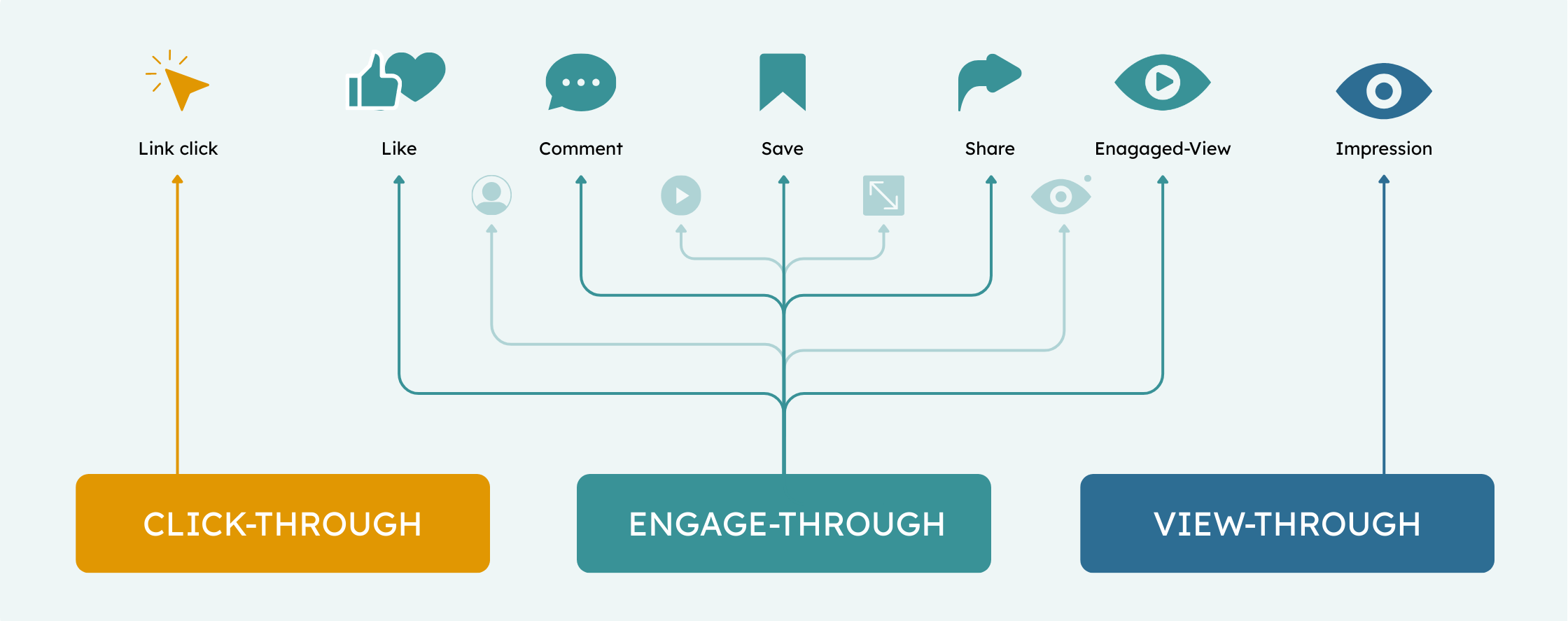
Historically, Meta counted almost any interaction with an ad as a click. This included actions such as liking a post, commenting, sharing, or clicking on the image. If a user later converted within the attribution window, the conversion could still be attributed as a “click-through.”
Under the new definition, click-through attribution now requires an actual link click. In other words, the user must have clicked a link that directs them to a website, shop, or landing page before the conversion occurred.
This adjustment brings Meta’s attribution logic closer to what marketers typically assume when they hear the term click-through. It also improves alignment with third-party analytics platforms such as Google Analytics.
Meta Engage-Through Attribution: Tracking Engagement Without Website Visits
Meta is also renaming “Engaged-View” attribution to “Engage-Through.”
This new category includes interactions that signal interest but do not necessarily involve a visit to the advertiser’s website. These interactions include video views longer than five seconds, as well as likes, comments, shares, and saves.
The change effectively separates two types of user behavior. One category represents clear intent to visit a website. The other captures passive or social engagement with the content.
In Ads Manager, marketers can now compare attribution settings to see how conversions are distributed between these two behaviors.
3 Reasons Meta’s Attribution Changes Matter for Marketing Strategy
At first glance, the update may seem like a minor reporting adjustment. In reality, it has broader implications for measurement, accountability, and strategic decision making.
Greater Transparency in Platform Reporting
For years, one of the biggest frustrations among marketing teams has been the discrepancy between platform-reported conversions and actual website activity.
By requiring a genuine link click for click-through attribution, Meta reduces the likelihood of inflated conversion reporting. This creates a more transparent foundation for evaluating campaign performance.
Improved Alignment with Third-Party Analytics
Industry research consistently highlights the fragmentation of marketing measurement. Marketers frequently rely on multiple tools to evaluate campaign impact, including platform dashboards, web analytics, and internal BI systems.
When attribution logic differs between platforms, performance comparisons become difficult. Meta’s update narrows this gap by aligning attribution more closely with how web analytics tools measure traffic.
What Meta’s New Attribution Metrics Reveal About Customer Intent
Separating link clicks from engagement interactions provides clearer insight into user intent.
A user who watches a video or likes a post may be interested in the brand. A user who clicks through to the website demonstrates a stronger signal of purchase consideration.
Distinguishing between these behaviors allows marketing leaders to better understand how upper-funnel engagement translates into lower-funnel outcomes.
How Attribution Models Influence Marketing Budget Allocation
Attribution models do more than report performance. They shape how budgets are distributed across channels.
If a platform’s attribution model overstates its contribution to conversions, it can attract more budget than it truly deserves. Conversely, channels that influence customer decisions earlier in the journey may appear undervalued.
This is where the concept of incrementality becomes critical. As explained in Crealytics’ Incrementality Playbook, many conversions reported by ad platforms would have occurred even without the ads themselves. The goal of incrementality measurement is to identify the sales genuinely driven by advertising rather than those that simply happen near an ad exposure.
When attribution becomes more precise, marketing leaders gain a clearer view of which channels truly influence customer behavior. This clarity allows budgets to be allocated based on real impact rather than reporting artifacts.
Practical Steps to Adapt Your Measurement Strategy After the Meta Update
Meta’s update offers an opportunity for marketing teams to refine how they interpret performance data.
Review Your Reporting Framework for Meta’s New Attribution Model
Marketing dashboards and performance reviews should now incorporate the distinction between click-through and engage-through attribution.
Separating these signals can reveal how much revenue is driven by direct website visits versus broader social engagement.
Compare Attribution Settings in Ads Manager
Meta provides a “Compare Attribution Settings” feature that allows marketers to evaluate results under different attribution views.
Leaders should use this functionality to understand how conversions are distributed across click-through and engagement interactions.
Strengthen Incrementality Measurement
Platform attribution is only one part of the measurement puzzle. Teams should complement platform data with incrementality testing, geo holdouts, or lift studies.
These approaches help determine whether campaigns actually influence purchasing behavior rather than simply capturing existing demand.
The Bigger Picture: Attribution Transparency in Modern Digital Marketing
Meta’s attribution update reflects a broader shift happening across the digital advertising ecosystem. As privacy regulations evolve and measurement becomes more complex, platforms are gradually moving toward more transparent and realistic reporting.
For marketing leaders, the key takeaway is not just the change in terminology. It is the opportunity to gain a clearer understanding of how different types of interactions contribute to business outcomes.
Separating engagement from true website visits provides a more nuanced picture of performance. When combined with incrementality testing and cross-channel analysis, it enables more confident decisions about where marketing investment should go next.
In a landscape where every budget line must justify its impact, clarity in attribution is no longer just helpful but essential.
---
Need help interpreting Meta’s new attribution metrics and what they mean for your media strategy? Reach out to us.
Relevant Insights:
· Article: Crucial A/B Test Ideas to Boost Paid Advertising Performance
· Case Study: Unlocking Incremental Growth for Paid Social: How Retailer X Proved the Value of Meta Ads Prospecting
About Crealytics
Crealytics is an award-winning full-funnel digital marketing agency fueling the profitable growth of over 100 well-known B2C and B2B businesses, including ASOS, The Hut Group, Staples and Urban Outfitters. A global company with an inclusive team of 100+ international employees, we operate from our hubs in Berlin, New York, Chicago, London, and Mumbai.
EXPERT INSIGHTS