Q&A: Lessons from Managing and Auditing Global Paid Media Budgets across Retailers and DTC Brands

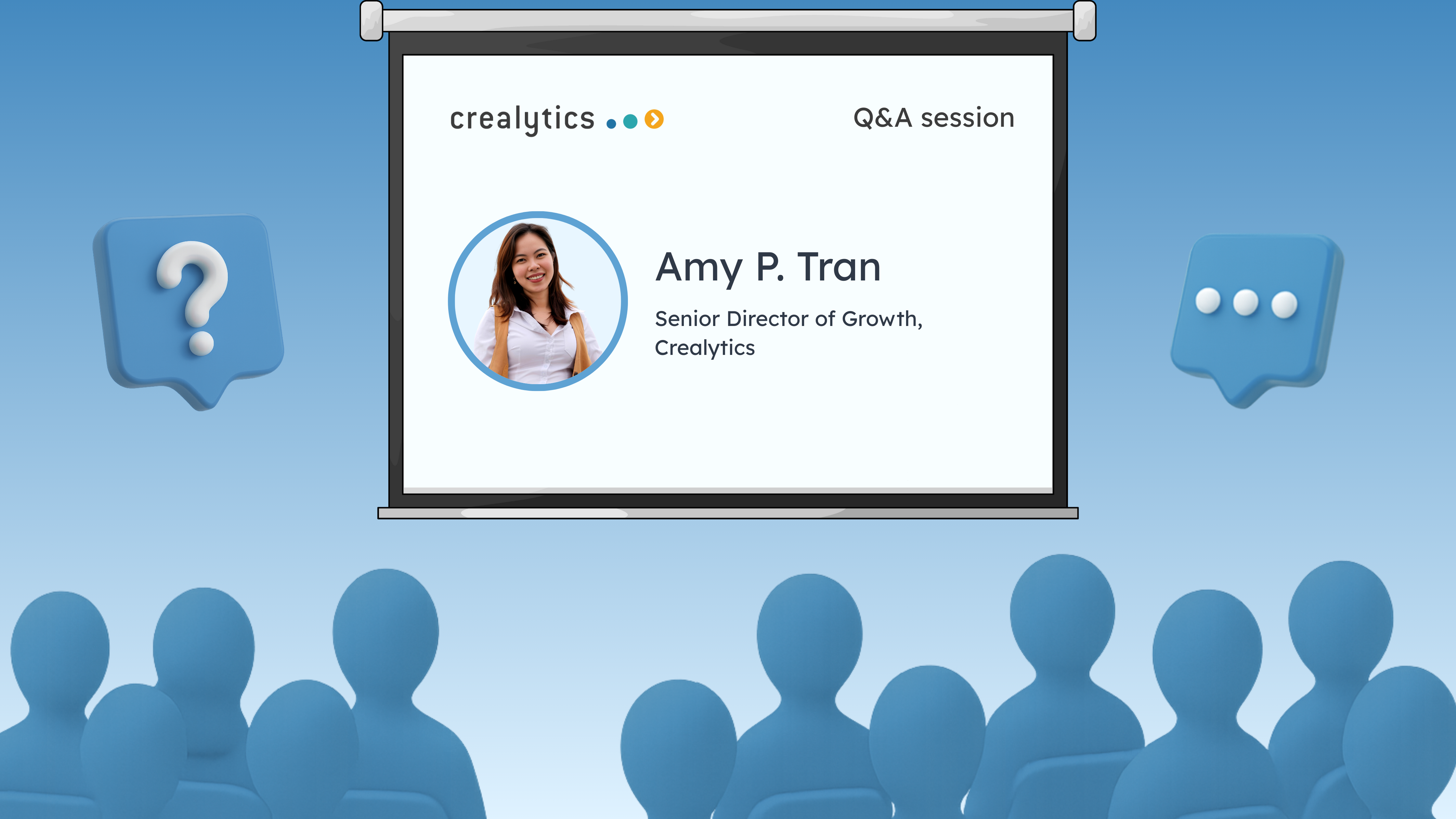
Global retailers and DTC brands face recurring challenges as they scale paid media across Europe, North America, and APAC. In this Q&A, Amy P. Tran, our Senior Director of Growth, breaks down the patterns she sees when auditing multi-million-dollar accounts, from structural gaps to unnecessary budget waste.
She shares lessons from working with global retailers like Urban Outfitters and Foot Locker, explains how regional nuance shapes Paid Search and Paid Social, and outlines how to balance global consistency with local adaptation. Amy also highlights the common mistakes brands make when entering new markets and what it really takes to build long-term performance in unfamiliar regions.
Let’s get started.
1) What patterns do you typically see when auditing global paid media budgets across Europe, North America, and APAC?
One pattern I often see is a lack of foundational structure. Teams love trying new things, e.g. new audiences, new formats, new campaign types. That’s great! There’s nothing wrong with that. Testing is good. But when "trying things" becomes the strategy, it usually means the fundamentals were never set up properly.
A memorable example is when I audited a $2.7B US-based retailer spending $150M on paid social. Across the year, they ran 300+ active campaigns, and over half mixed completely new audiences with loyal, high-value customers in the same ad sets. This means roughly $70M wasted serving ads to people who would’ve purchased anyway. Another 30% of budget went to awareness, despite already having incredibly strong brand equity. This 30% could have been allocated to mid-funnel to remind engaged audiences of the brand and persuade them to purchase gradually.
When you skip audience fundamentals from the start, you can lose the ability to run mid-funnel retargeting that persuades people. Foundations do not scream out ‘acceleration,’ but they keep you from lighting $70M on fire.
2) How do regional nuances influence paid search and paid social strategies for global brands?
Large global accounts often rely on MCC or manager-level structures to leave room for growth in each region. This can work beautifully, if the architecture is lean, consistent, and hierarchical.
But once you start expanding into new markets, that’s when things get messy. In paid social especially, it can clash with Meta’s “less is more” principle that many account managers from Meta advocate for. Building brand awareness across new markets requires real localisation, and sometimes ASC alone can’t carry that weight.
Localisation done properly demands market research, thoughtful segmentation, audience structuring, and creative tailored to local nuance. Otherwise, you might end up with an account structure that’s either too centralised to adapt, or too fragmented to scale.
3) What key lessons have you learned from working with global retailers like Urban Outfitters and Foot Locker?
When I think about working with global brands like Urban Outfitters or Foot Locker, a few things always stand out. First, having clear goals from the beginning changes everything. With UO, for example, we aligned on performance expectations early, which meant we could test, learn, adjust, and actually build momentum instead of guessing in the dark. That clarity is a big part of why the work ended up being award-recognised.
I also think there’s a sweet spot between understanding the industry and adapting to a brand’s evolution. Everyone’s talking about AI. And yes, we’re absolutely leaning into AI-driven workflows and automation, even winning award-recognition for our AI adaptation. Some of it is genuinely game-changing. But I don't believe in automating everything just because it’s possible. AI isn’t a Growth Director. It still needs humans to steer it, challenge it, and make sure it reflects the brand’s voice and values.
Nevertheless, collaboration is the ultimate performance lever. Things do go wrong, such as promos dropping last minute, a data feed failing overnight,…or a cat sitting on the keyboard. It happens. But when teams communicate openly, stay transparent, and trust each other, you can navigate the chaos smoothly. Especially in retail, where chaos is basically the default setting during peak season.
4) How do you balance global consistency with local market adaptation in large-scale paid media accounts?
When it comes to balancing global consistency with local nuance, having clear performance targets for each market, and for the business as a whole, is vital. Once that foundation is set, I recommend breaking those targets down by channel so every region understands exactly what success looks like. At the end of the day, everything still needs to ladder up to the same global goal, whether that’s ROAS, CAC, or growing new customers.
From there, I think of consistency as the backbone and localisation as the muscle. You need both. The structure keeps everything aligned, and the localisation gives each market the flexibility to actually perform in a way that makes sense for them.

"When it comes to balancing global consistency with local nuance, having clear performance targets for each market, and for the business as a whole, is vital."
5) What mistakes do retailers and brands commonly make when expanding internationally with paid media?
I think the biggest mistake retailers and brands make when they scale into new markets is expecting instant sales. It just doesn’t work like that. Building familiarity and trust takes time, but TikTok has made everyone believe they’re one viral moment away from overnight success. That’s great when it happens, but you can’t build a strategy on luck. If you want those moments, you should first invest in the upper funnel, e.g. influencer marketing (where there’s a possibility of a viral moment), CTV, or YouTube.
And then there’s the second mistake, which is really just a reaction to the first: setting unrealistic targets and then making poor decisions when things don’t perform immediately. That’s when you start seeing ASC being turned off to chase vanity metrics, boosted posts suddenly replacing actual campaigns, people toggling ads on and off and completely resetting algorithm learning, or budgets being shifted way too aggressively, way too early. I see it all the time, and it’s usually panic rather than strategy.
For new markets, consistency really does beat speed. You build the base, nurture the middle, and let performance come after. There’s no shortcut really, especially not the “panic-refresh all ads and hope for the best” approach.
Key learnings for digital marketing leaders
· Foundations beat complexity: Global accounts fail when structure is messy. Clear goals, clean segmentation, and a disciplined architecture prevent millions in wasted budget.
· Local nuance drives real performance: “Less is more” only works when paired with market-specific research, creative, and audience strategy, especially in early-stage or expansion markets.
· Consistency outperforms speed: New markets rarely deliver instant sales. Brands that invest steadily across the funnel, instead of panic-adjusting, build stronger, more profitable growth over time.
---
Need help managing your global paid media accounts? Reach out to us.
Relevant insights
· Case study: How this luxury retailer unlocked $30M in additional profit with their performance marketing
· Article: Q&A: Why Should Retailers and DTC Brands Use Google Performance Max for Growth?
· Video: Is the Funnel in Digital Marketing Really Dead?
About Crealytics
Crealytics is an award-winning full-funnel digital marketing agency fueling the profitable growth of over 100 well-known B2C and B2B businesses, including ASOS, The Hut Group, Staples and Urban Outfitters. A global company with an inclusive team of 100+ international employees, we operate from our hubs in Berlin, New York, Chicago, London, and Mumbai.
EXPERT INSIGHTS