The Sound-On Era: How Ad Consumption Is Becoming More Intentional and Immersive?

For years, digital advertising has operated on a simple idea: if brands showed up often enough, in enough places, they would eventually capture attention. Reach grew. Impressions scaled. And for a long time, that approach worked.
Today, the challenge is no longer reaching consumers. It is understanding how they choose to spend their attention.
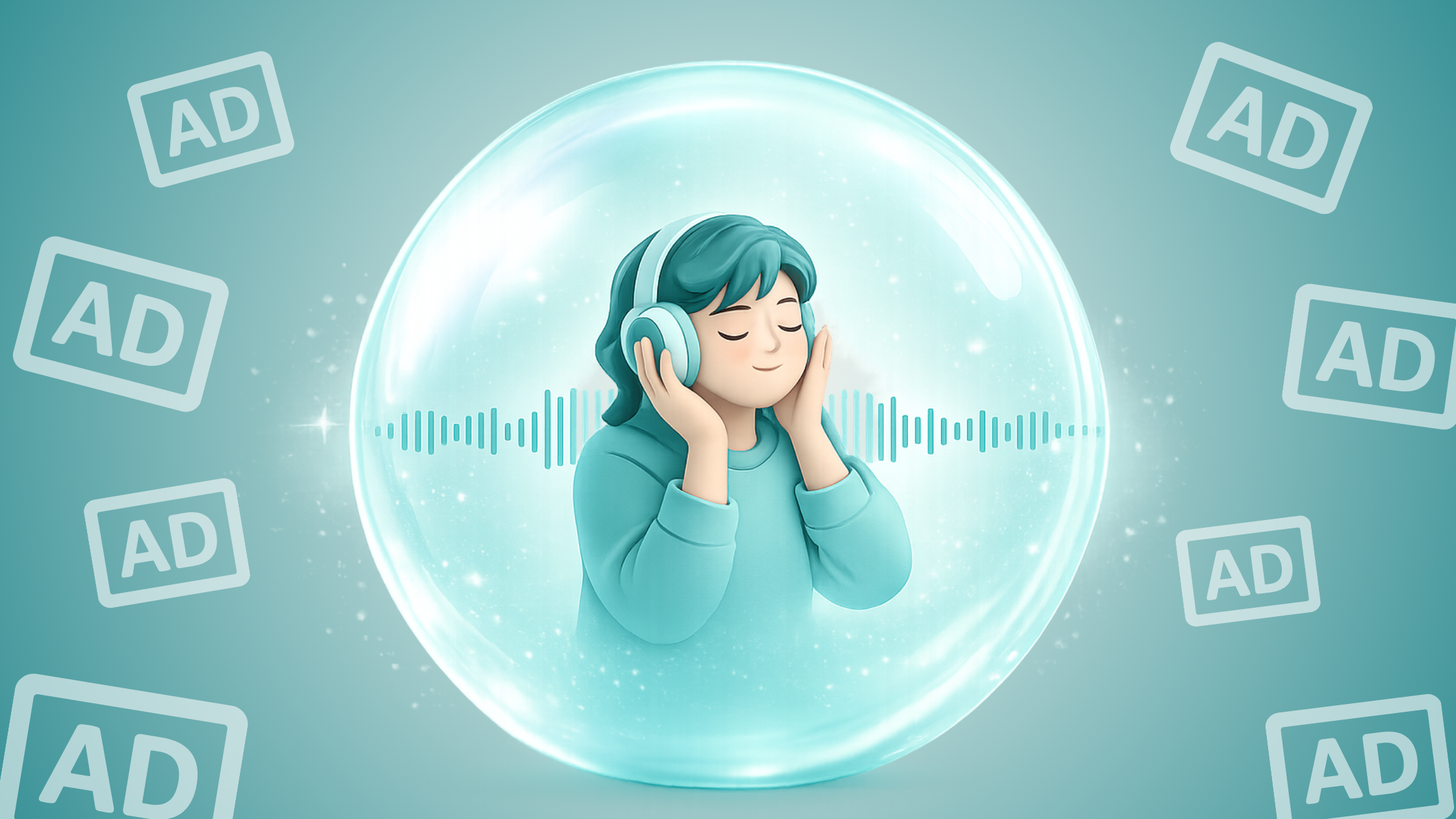
People are consuming more content than ever before, but they are also becoming more intentional about the experiences they engage with. Whether listening to a podcast during a commute, streaming music while exercising, or tuning into an audiobook at home, consumers are increasingly choosing media that fits naturally into their lives rather than competing for their attention.
One increasingly important part of this shift is audio, a channel gaining renewed attention as marketers look beyond traditional screen-based experiences. The evidence emerging around audio offers useful insights into how consumer behavior is evolving, and what that could mean for the future of advertising.
"Despite our industry telling us for years that we should be optimizing for sound off, that's actually not the case." - Jenny Haggard, Global Head of Thought Leadership, Spotify
What Happens When Attention Becomes Harder to Secure?
The phrase 'attention economy' may be overused, but the mechanics behind it still matter. They help explain why ad consumption is becoming more selective.
Digital advertising matured alongside platforms built to maximise time-on-site. More engagement created more ad inventory. More inventory increased scale and accessibility. It also contributed to environments where consumers are exposed to more messages than they can meaningfully process at once.
The result is familiar across channels: more filtering, more muting, and more selective engagement. People are still spending time with media, but they are becoming more intentional about how they do it.
Spotify's global research, surveying 5,000 consumers, 105 advertisers, and 30 expert interviews, offers one view into where some of that behaviour is moving. It found that 86% of Spotify users mute video on other platforms to listen to music, podcasts, or audiobooks instead. That is a useful signal of changing media habits and growing intentionality in consumption.
Additionally, 75% of consumers remember the audio content they listen to - 9% higher retention than social media content. (Spotify 'The Sound-On Era' Report, 2026)
For advertisers, this makes context more important. The question is not which channel matters most in isolation. It is how different media environments contribute at different points in the consumer journey, and where attention is more likely to be actively given rather than passively available.
Relevant Insight: Ad Receptivity Is Rising But Attention Is Falling: What CMOs Need to Know
Why Is Audio Becoming a More Intentional Media Environment?
One of the longstanding assumptions around audio advertising is that it reaches people mainly in the background - while commuting, cooking, or exercising. What stands out now is how naturally audio fits into those moments.
People listen while doing other things, but the listening itself is still a choice. A commuter may not want to look at a screen on a crowded train. A runner may not choose video early in the morning. Audio fits those moments in a way that feels practical, consistent, and often immersive.
"It's moving into that emotive-led creative that you can't get when you're just watching a video, sound off, and scrolling mindlessly." - Florence Koch, Global Media Manager, Electronic Arts
Spotify's research found that 80% of advertisers agree audio ads benefit from higher audience attention and less distraction compared to other digital media. Two in three advertisers say audio reaches consumers when they are most receptive. These findings speak to the quality of contact and the role of context in shaping receptivity.
That matters for performance marketers because attention is never uniform. Some impressions land quickly. Others land in moments where the audience is more settled and more open. Audio appears to perform well in those conditions, which helps explain its growing role in the mix.
Research from LinkedIn found 4-8x ROI from audio in media mix models. That supports the case for treating audio as a meaningful part of a broader paid media strategy. At Crealytics, we have also seen growing interest in audio as a strategic channel, which is one reason we launched our podcast, Growth Interrupted, to explore the trends shaping modern marketing leadership.
How Is Voice AI Making Audio More Interactive?
The shift in audio is also about how the medium is evolving.
Voice is becoming a more natural digital behaviour. The global market for voice agents is projected to grow from $2.4 billion in 2024 to $47.5 billion by 2034, according to Market.us data cited in Spotify's report. That points to a broader change in how people may engage with media and brands over time.
70% of consumers say they would use voice commands to engage with an ad they like - even when their screen is off. (Spotify 'The Sound-On Era' Report, 2026)
When 70% of consumers say they would use voice commands to engage with an ad without looking at a screen, it signals clear potential for interaction in audio environments.
Spotify's AI DJ feature, which allows users to interact with music recommendations through voice requests, saw streams increase 45% and had 42% of DJ users engaging via voice commands after its rollout in May 2025. That suggests growing comfort with voice-enabled media experiences at scale.
For digital leaders, this introduces another area to watch. Search has the click. Social has the tap or swipe. Voice-enabled audio may develop its own response behaviours over time. Brands building audio strategies now are learning in that environment early.
Why Is Trust Becoming a More Important Media Metric?
There is another part of the audio story that is becoming harder to ignore: trust.
The open web in 2026 is saturated with synthetic content. AI-generated articles, AI-produced video, and AI-scripted social posts are contributing to a denser and more complex content environment. In response, people are placing greater value on sources, creators, and platforms they already know.
Audio - especially podcasting - benefits from that dynamic in a distinct way. The listener has chosen the host, the format, and the moment. Spotify's research found that 63% of people trust their favourite podcast host more than their favourite social media influencer. Among advertisers, 80% agree that audio builds greater consumer trust than other digital media formats.
"As AI generates infinite content, human taste becomes more valuable. Brands balancing AI scale with human curation will cut through the noise."
When a host reads an ad, the message arrives in an environment where credibility is already established. That can shape how the brand is received.
For media planning, the environment matters as much as the placement. Trusted, chosen settings can influence the quality of attention and the quality of response. Audio is becoming increasingly relevant on that front.
What Does This Mean for How Media Plans Should Evolve?
Taken together, the attention quality data, the voice interaction trajectory, and the trust dynamics point to a clear conclusion: audio deserves more deliberate consideration in the media mix.
That does not change the role of other paid media channels. Search, social, display, online video, and retail media remain essential to full-funnel performance. Audio's role is growing within that broader ecosystem, particularly in moments where audience attention is more intentional and immersive.
Reconsider where audio fits in the funnel
Audio is often treated primarily as an awareness channel. The trust dynamics and voice interactivity signals suggest a broader role. It can help build recognition and emotional resonance, support consideration, and reinforce confidence through repeated engagement. Florence Koch of EA described it as 'one of those touch points that become unmissable across your campaign' when used intentionally.
Treat attention quality as a planning input
Reach and frequency remain important, but they do not tell the full story. The conditions around an impression matter too. As measurement frameworks evolve, attention quality will become more useful in planning decisions. Audio's growth is tied in part to how well it performs on that dimension.
Build for more interactive audio experiences
The 70% of consumers willing to use voice commands to engage with an ad is worth paying attention to. Brands investing in audio creative today are also gaining familiarity with a format that may become more interactive over time.
Use the trust environment deliberately
Not all audio inventory works in the same way. The host matters. The show matters. The listener relationship matters. Host-read ads in high-loyalty environments carry a different kind of value from broader streaming or programmatic placements. That makes context an important part of the planning decision.
What Does the Sound-On Era Mean for Brands?
The sound-on era reflects a broader shift in how people engage with media.
Ad consumption is becoming more intentional. Attention is becoming more contextual. Immersion is becoming more valuable. Audio is growing within that shift because it aligns well with moments where people are choosing how they engage.
For brands, that makes audio less of a side consideration and more of a strategic complement within the wider paid media mix. Its value comes from the role it can play alongside established channels, bringing presence, attention, trust, and emerging interactivity into a more rounded media strategy.
---
Curious whether audio deserves a bigger role in your strategy? Reach out to us.
Relevant Insights:
· Article: The AI Bubble in Paid Media: Will It Continue to Float or Finally Burst in 2026?
· Article: 5 Consumer Behavior Shifts Shaping the Future of Paid Media
· Article: How Does Incrementality Shape Budget Allocation Across Channels?
About Crealytics
Crealytics is an award-winning full-funnel digital marketing agency fueling the profitable growth of over 100 well-known B2C and B2B businesses, including ASOS, The Hut Group, Staples and Urban Outfitters. A global company with an inclusive team of 100+ international employees, we operate from our hubs in Berlin, New York, Chicago, London, and Mumbai.
EXPERT INSIGHTS