Market Signals #1: Latest Updates on AI, Ad Revenue, and the New Rules of Paid Media

Over the past two weeks, AI didn’t just improve campaign performance - it expanded its role across targeting, discovery, and even transactions. At the same time, platform economics are shifting, with social continuing to pull ahead and reshape how budgets are allocated.
Here’s what changed - and what it means for how decisions are made.
1. Meta Dethrones Google in Ad Revenue
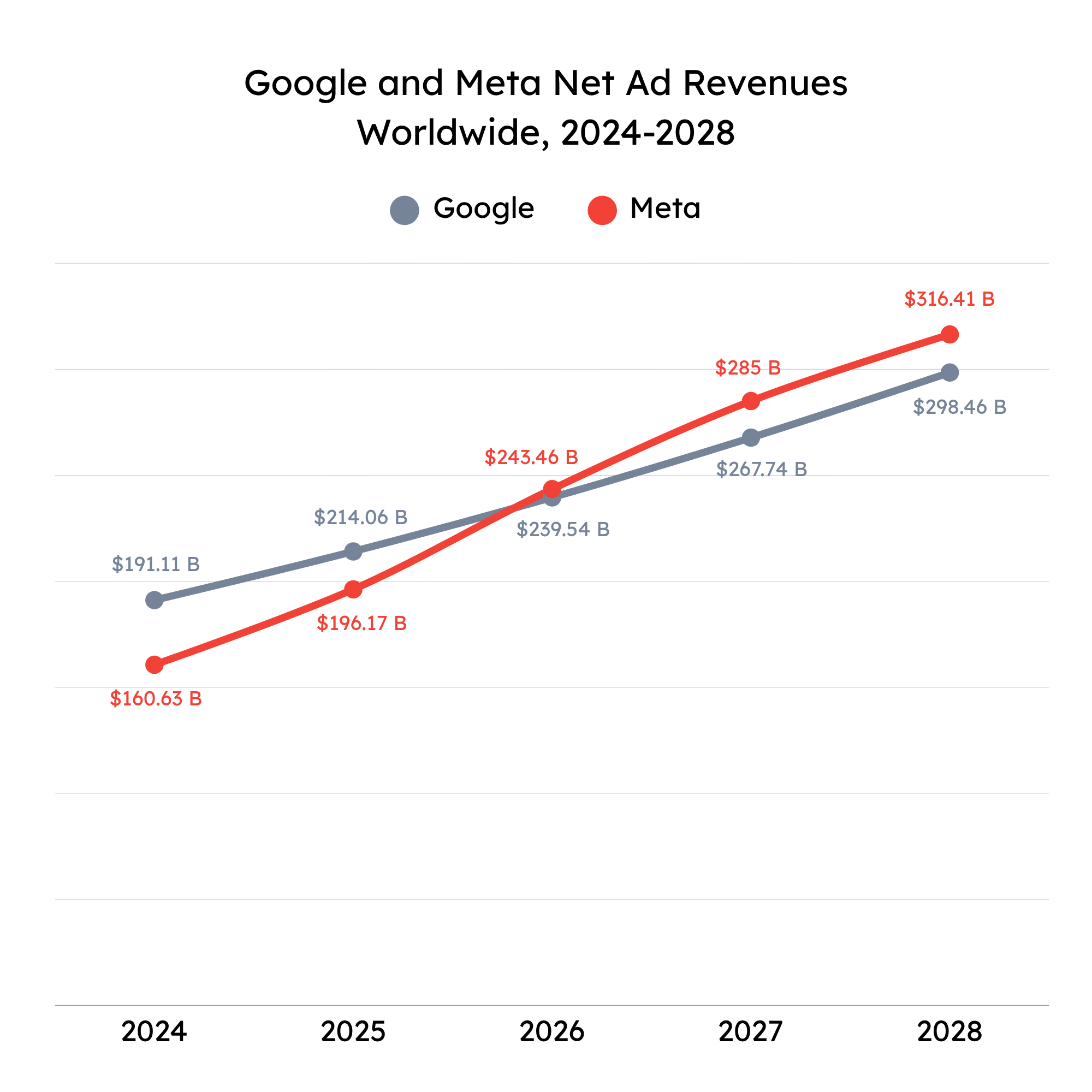
According to eMarketer’s April forecast, Meta is projected to generate $243.46 billion in net worldwide ad revenue in 2026, edging ahead of Google’s $239.54 billion. After roughly two decades at the top, Google is about to cede the #1 spot - by a margin of just $4 billion. The growth gap tells the real story. Meta is growing at 24.1% versus Google’s 11.9%, driven largely by Reels and Advantage+, its AI-powered campaign automation system. Together with Amazon, the three platforms will control 62.3% of total worldwide digital ad spend.
Crealytics' Take
This marks a broader shift in where attention is moving and how platforms are turning that attention into ad revenue. Social has strengthened its role beyond awareness and into performance, especially as automation tools like Advantage+ reduce the operational gap between channels. For teams still heavily weighted toward Search, this is a useful moment to reassess how budgets are distributed across the funnel.
2. AI Max Expands into Shopping
Google has extended AI Max capabilities into Shopping campaigns, bringing automated matching, creative generation, and campaign optimization into one of the most structured formats in paid media. Shopping, which traditionally relied on clear product feeds and query-level intent, is now moving toward a more dynamic system where AI determines how products are surfaced and positioned.
Crealytics' Take
This changes where control sits. The role of Shopping is expanding from query-to-product matching into a system where product data directly shapes how AI interprets, ranks, and surfaces inventory. Advertisers who have invested in rich, structured feeds are now at a structural advantage. Those working with thin or incomplete feeds are giving AI weaker inputs at exactly the moment those inputs matter more.
Relevant article: Why Is AI Max Considered a Breakthrough in Automated Advertising?
3. Microsoft Rebuilds Its Ad Stack Around AI
Microsoft rolled out a broad set of AI-driven updates across its advertising platform. Audience creation now happens through natural language inputs, Copilot is being integrated into discovery and shopping experiences, and new tools are emerging to show how AI systems interpret and surface content. At the same time, checkout is increasingly happening within these AI-driven environments, reducing friction between discovery and conversion.
Crealytics' Take
The scale of these updates suggests a wider redesign of how Microsoft wants its ad ecosystem to work. AI is being placed across targeting, discovery, measurement, and conversion, which changes what advertisers need to optimize for. Success depends less on duplicating Google campaign structures and more on making sure brand, product, audience, and value proposition signals are clear enough for AI systems to interpret. For B2B, the LinkedIn targeting integrations alone make this a channel that deserves its own strategy.
4. ChatGPT Introduces CPC-Based Ads
ChatGPT is reportedly testing CPC-based ads in the $3–$5 range, marking one of the first moves toward performance-driven monetization within AI-native environments. Early signals suggest lower competition but also limited reporting and delivery consistency as the platform evolves.
Crealytics' Take
ChatGPT ads introduce a different kind of paid media environment, one that sits closer to early-stage discovery than traditional search. AI platforms can influence demand before users turn that intent into a query, which makes measurement more complicated from the start. The opportunity right now is early positioning, especially for considered-purchase categories where AI is already part of the research journey. Reporting will likely lag behind impact, so test budgets need to be treated accordingly.
See our CMO, Rosaria Alfano’s POV on the matter.
Relevant article: ChatGPT Ads: A Strategic Preparation Guide for Digital Media Leaders
What AI-Led Platform Changes Mean for Performance Marketing
Across all four signals, the direction is consistent. AI is moving beyond optimization and into decision-making layers across the entire journey, while platform power continues to consolidate around a few dominant ecosystems.
As that happens, control shifts away from campaign setup and toward the quality of data, inputs, and positioning. Paid media is becoming less about managing channels and more about influencing how systems interpret and act.
The mechanics are evolving. But more importantly, so is where the real leverage sits.
---
Unsure how these changes should shape your next media planning decisions? Reach out to us.
Relevant Insights:
· Article: Meta Ads Attribution Update: How the New Click-Through Definition Changes Performance Reporting
· Article: The Role of Google’s Demand Gen in the Customer Journey
· Article: Why the Multiplier Effect Still Matters in 2026: Brand, Performance, and AI-Driven Growth
About Crealytics
Crealytics is an award-winning full-funnel digital marketing agency fueling the profitable growth of over 100 well-known B2C and B2B businesses, including ASOS, The Hut Group, Staples and Urban Outfitters. A global company with an inclusive team of 100+ international employees, we operate from our hubs in Berlin, New York, Chicago, London, and Mumbai.
EXPERT INSIGHTS