Q&A: ChatGPT Ads for DTC Brands and Retailers: Cutting Through the Hype

.png)
There's a lot of hype around ChatGPT ads right now, but very little signal. Some are calling it the next Google. Others are already writing it off as a gimmick. The truth, as usual, is somewhere more nuanced. We sat down with Amy P. Tran, our Senior Director of Growth, to get a grounded take on what ChatGPT ads actually are, who they're right for, and what a smart first test actually looks like.
What OpenAI Actually Launched, and Why the Industry is Paying Attention
Q1: OpenAI Just Launched Ads. What's Actually Happening Here, and Why Is Everyone Talking About It?
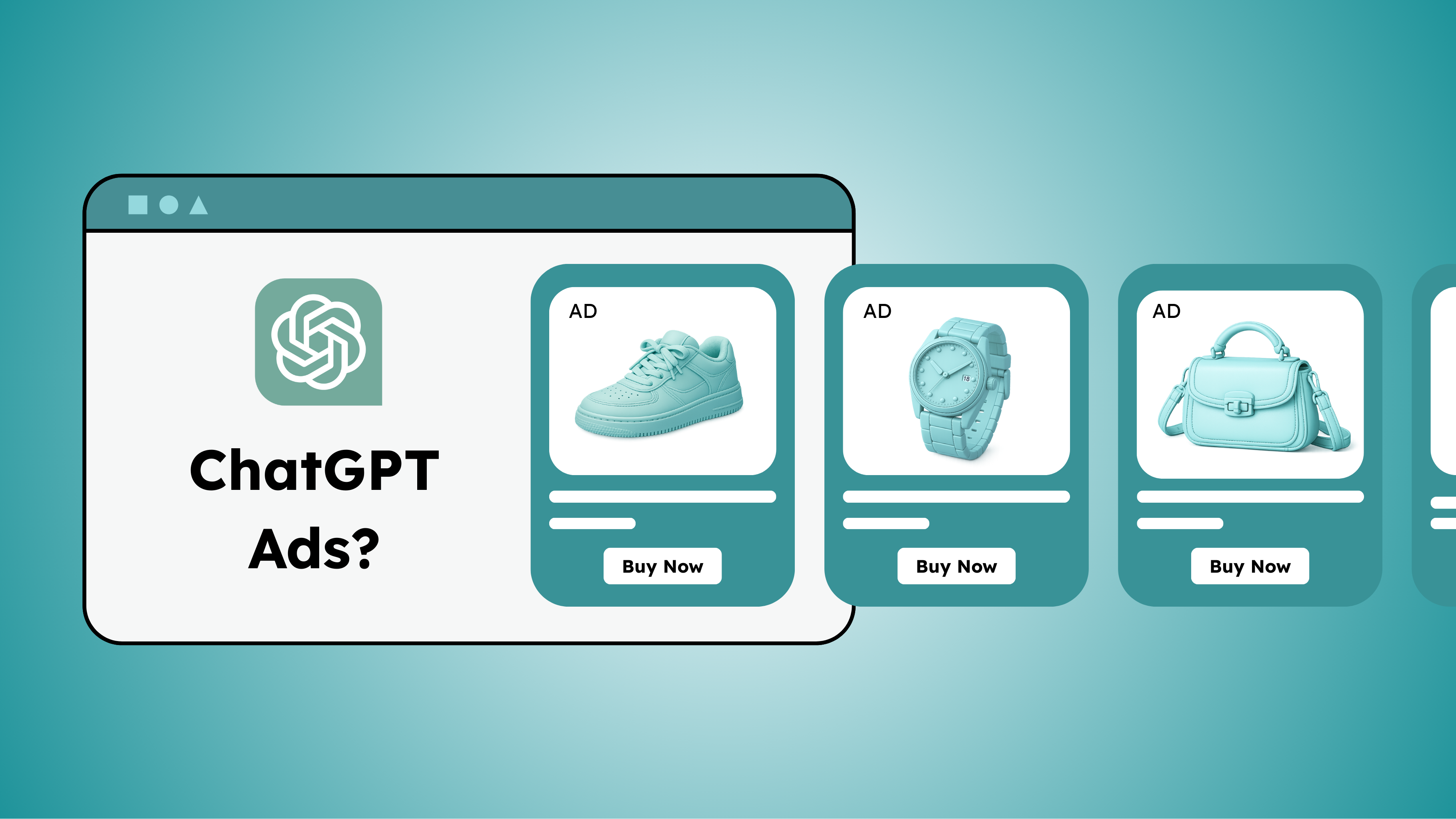
Amy: OpenAI has officially entered the advertising market, rolling out a paid placement model within ChatGPT that allows brands to appear inside AI-generated responses. Unlike Google Search, where ads appear alongside results, ChatGPT's ad format is woven directly into the conversation, positioned as part of the model's reply. The buzz is partly justified: with ChatGPT reporting over 900 million weekly active users globally, the platform represents a genuinely large and highly engaged audience. But it's also partly hype. The format is still early, measurement is immature, and the long-term user tolerance for ads in a conversational experience remains an open question.
Q2: What's the Biggest Misconception You're Seeing in How the Industry Is Reacting to ChatGPT Ads?
Amy: The most common mistake I'm seeing is brands treating ChatGPT ads like a new performance channel, expecting direct-response results from what is, right now, primarily an upper- and mid-funnel tool. The objectives currently available are views and traffic. There's no (yet!) standard conversion tracking, no mature attribution model, and no proof of concept that holds up to the scrutiny you'd apply to a Google Shopping campaign.
That said, dismissing it entirely is also wrong. The incremental value potential here is real. When you look at ad penetration data, ChatGPT's overall ad rate already sits significantly above Google's in-AI-Overview placements. According to a recent study by Cloro, ChatGPT's ad penetration is running roughly 100 times higher than Google's AI Overview rate on the same query cohort. ChatGPT is showing fundamentally different density of placement than Google AI. More importantly, the brand equity and discovery opportunity in a high-intent conversational environment is something that compounds over time. The brands who are paying attention now will have a real advantage when the channel matures.
First-Mover Advantage, or Too Early to Commit Real Budget for ChatGPT Ads?
Q3: Is This a First-Mover Advantage Situation, or Is It Too Early and Too Noisy to Justify Meaningful Budget?
Amy: It depends less on the channel itself and more on where your business actually is right now. If you're seeing aggressive competitor activity eating into your Search impression share, or your brand is barely showing up in AI-generated recommendations in key markets, then yes, testing ChatGPT ads is a reasonable move. The signal-to-noise ratio is still low enough that even a modest, intentional test can generate useful learnings.
On the other hand, if you're a growing DTC brand that's finally building meaningful social following but your paid search foundation is still mostly branded terms, channel discipline matters more than channel novelty. Fix your search visibility first. ChatGPT's discovery engine ultimately draws from what's already indexed and cited across the web, which means your organic credibility is still the prerequisite.
The more useful framing for budget allocation isn't "is this channel ready?" but "what's my least productive channel right now, and where is it headed over the next 24 months?" If something in your current mix is losing relevance or delivering negative ROI on a predictable trajectory, that's your test budget. Redirecting it toward an emerging channel with strong incremental potential and genuine discovery upside wouldn’t be a gamble but a smart move in portfolio management.
Q4: What Types of DTC Brands or Retailers Are Best Positioned to Benefit From ChatGPT Ads Right Now, and Who Should Hold Off?
Amy: Brands best positioned for ChatGPT ads are those that already have established search visibility and are beginning to see diminishing returns from their existing channels, so basically where the next growth lever is breadth, not depth. These are typically brands with some degree of channel diversification already in place, a track record of showing up in organic search and third-party editorial content, and a product category where considered discovery (rather than impulse) drives purchases.
For brands still building their foundations, those in early-stage growth, with limited search presence and little third-party social proof online, the priority should remain on establishing that credibility first. This matters practically, not just strategically: ChatGPT's ad placement and response quality are influenced by what's already available on the web about your brand. If you're not showing up meaningfully in organic search, reviews, and editorial content, there's limited infrastructure for your ads to build on. Paid presence without earned presence is a leaky bucket.
Creative and Copy: Why the Conversational Context on ChatGPT Changes Everything
Q5: How Should Brands Approach Creative and Copy Differently for a Conversational AI Environment Versus a Traditional Search or Social Ad?
Amy: In search or social, you're interrupting. The user has a scroll pattern or a query, and your ad fits into a defined visual slot. You have about two seconds to earn attention, so the instinct is to lead with the offer "30% off," "Free shipping," "Shop now." That logic doesn't hold in a conversational AI environment, where the user has asked a genuine question and is reading an actual response.
Copy in ChatGPT ads needs to earn its place in the conversation. That means leading with relevance and context, framing your product or brand as a natural part of the answer, rather than leading with a promotional hook. Think less about the click and more about the impression: does this placement make the user feel like they were helped, or sold to? Brands that can position their product as the credible, informative option within a response will outperform those importing their performance creative wholesale. The format rewards substance over noise, which, frankly, is not the worst outcome for brands that have invested in building real product authority.
.png)
ChatGPT's ad placement and response quality are influenced by what's already available on the web about your brand. If you're not showing up meaningfully in organic search, reviews, and editorial content, there's limited infrastructure for your ads to build on. Paid presence without earned presence is a leaky bucket.
If a Brand Brought You $10K to Test ChatGPT Ads Today
Q6: If a Brand Came to You Today With $10K to Test ChatGPT Ads, What Would You Tell Them to Do With It?
Amy: First, I'd push back on taking the budget at face value. Before allocating a single dollar to a new channel, we'd audit their current paid media: where's the dead weight? Where are the signals that current activity is plateauing? The value of $10K in a new channel depends entirely on what $10K elsewhere is actually doing for them. It’s not that I’m choosing to be cautious. I want to make sure the client does not add a new channel in a silo while ignoring the structural inefficiencies already in the mix.
Second, I'd look hard at their existing channel data for targeting signals. Let’s say in Paid Search specifically, if there are search themes or keyword clusters on Google Ads with low traffic volume but strong purchase intent, those are your starting hypotheses for ChatGPT topic and theme targeting. The goal is to have all channels working with the same strategic logic, not independently optimising toward their own metrics while ignoring each other.
Third, I'd build a proper measurement pipeline from day one. Define your objective clearly (awareness? consideration? traffic quality?), align on the KPIs before spend begins, and build in a checkpoint to evaluate incrementality before committing more. We've recently applied exactly this approach with a client and are genuinely excited about what the early data is showing.
---
Curious whether ChatGPT Ads are a real opportunity or just early-stage hype? Reach out to us!
Relevant Insights:
· Article: ChatGPT Ads: A Strategic Preparation Guide for Digital Media Leaders
· Report: AI Tools for Paid Media: A Strategic Guide to Enterprise AI Adoption
· Article: How to Optimise for Generative AI Search: GEO vs. SEO
About Crealytics
Crealytics is an award-winning full-funnel digital marketing agency fueling the profitable growth of over 100 well-known B2C and B2B businesses, including ASOS, The Hut Group, Staples and Urban Outfitters. A global company with an inclusive team of 100+ international employees, we operate from our hubs in Berlin, New York, Chicago, London, and Mumbai.
EXPERT INSIGHTS