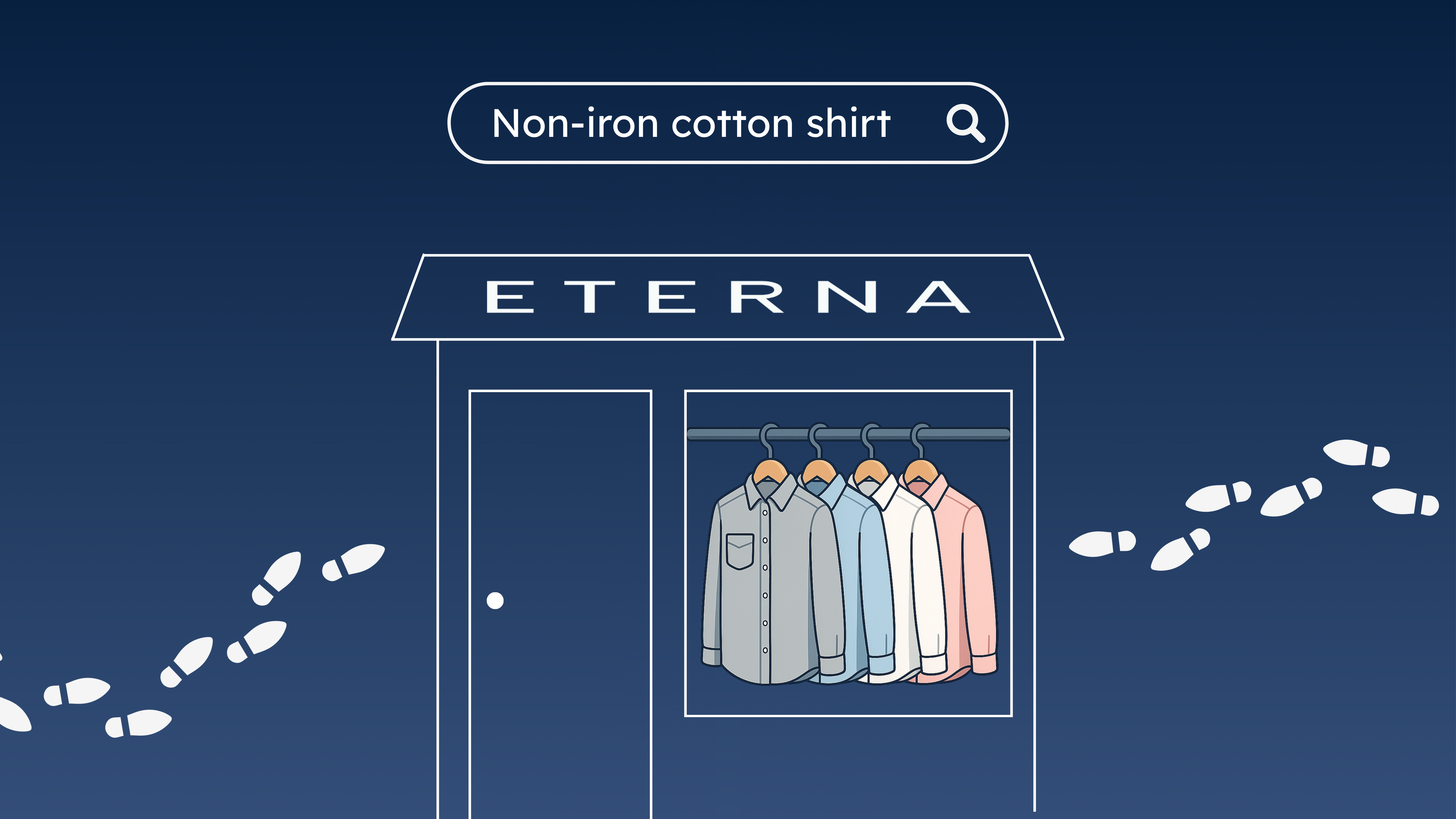
How to Optimise for Generative AI Search: GEO vs. SEO

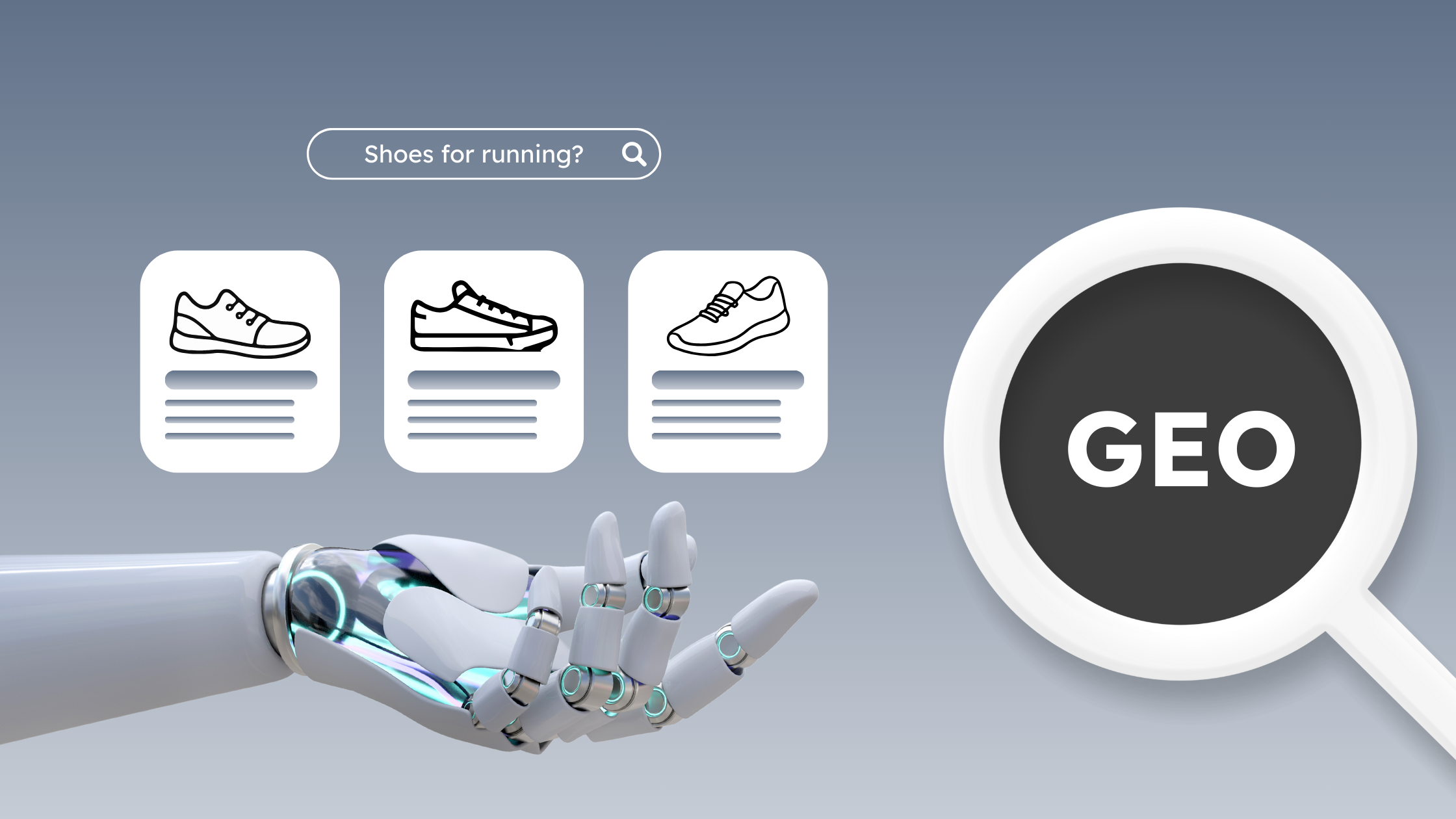
Why Search Strategy Is Shifting at the Structural Level
For years, search followed a predictable pattern that shaped how brands competed: users asked questions, search engines returned ranked links, and visibility depended on capturing the click. That pattern is breaking down, however. AI systems like ChatGPT, Google Gemini, Microsoft Copilot, and Perplexity AI increasingly sit in the middle, summarizing and recommending information rather than directing users to a list of links.
Gartner projects that traditional search engine volume will decline by 25% by 2026, driven by the growing use of AI chatbots and virtual agents that answer questions directly rather than sending users on to websites. Fewer searches now end in clicks. More of them end in conclusions.
That change raises the bar for visibility. Influence and brand authority no longer depend only on where a page ranks. They depend on whether a system decides a company’s content is clear enough, credible enough, and useful enough to be pulled into an answer. In practice, search strategy is stretching beyond SEO into what is increasingly referred to as Generative Engine Optimisation, or GEO.
SEO still plays a critical role. It ensures content can be discovered and indexed. But on its own, it no longer determines how ideas travel, how products are evaluated, or how brands show up in the moments that shape decisions.
Why Generative Engine Optimization Matters for Brand Visibility
Optimizing for generative AI supports visibility and influence as discovery mechanics evolve. As search increasingly happens through AI-mediated interfaces, several signals already indicate why Generative Engine Optimization is becoming critical.
User Search Intent Is Becoming Multi-Dimensional
Traditional search engines were built around relatively clear intent categories: informational, navigational, commercial, and transactional. Users typically entered a short query, reviewed a list of results, and refined their intent through additional searches or clicks.
Generative AI changes this pattern. AI-driven search systems interpret queries holistically and respond to multiple goals within a single interaction. Users increasingly combine research, comparison, and decision-making into one prompt rather than progressing step by step.
An analysis by Semrush shows that only 30% of ChatGPT prompts fit traditional search intent categories. The remaining 70% combine research, comparison, and decision-making into a single interaction. Content optimised for isolated keywords struggles to perform in these blended, exploratory queries. GEO helps content support how people now ask questions, not how they used to.
Zero-Click Searches Are Reshaping Visibility and Measurement
Search interfaces now surface summaries, explanations, and comparisons directly within the experience. Generative AI accelerates this trend by resolving questions without requiring a visit to an external site. As a result, visibility and influence often occur without measurable traffic.
Research from SparkToro shows that nearly 60% of Google mobile searches end without a click. Generative summaries, AI Overviews, and direct answers increasingly resolve queries inside the interface.
This does not mean content is less valuable. It means content is being consumed indirectly. Brands that optimise only for clicks can risk misreading declining traffic as declining relevance, even when their ideas actively shape user understanding upstream.
Traditional SEO Rankings No Longer Guarantee Visibility
Strong SEO foundations remain essential, but rankings alone no longer ensure exposure across the full search experience. As more users adopt generative AI tools, AI Overviews, and conversational search modes as their default entry point, content can rank well and still never be seen.
This concern is already reflected in market sentiment. According to Digital Marketing Institute, 90% of businesses are worried about declining online visibility due to AI-generated answers, AI search modes, and large language models. The concern is not about indexing. It is about being bypassed.
Further reinforcing this shift, Semrush projects that AI-driven search experiences could surpass traditional search usage by early 2028, potentially sooner if AI modes become the default interface. In that scenario, optimisation strategies focused solely on rankings leave large portions of the discovery journey unaddressed.
Higher-Quality Engagement and Conversion Signals Are Emerging
Early performance data suggests that traffic influenced or referred by AI systems behaves differently from traditional acquisition sources. In many cases, it is more engaged.
According to Adobe, by May 2025, AI-referred traffic showed materially stronger on-site behaviour:
· 27% lower bounce rate compared to non-AI traffic
· 38% longer time spent per visit
· 10% more page views per visit
While AI-driven traffic has historically converted at lower rates, the gap is closing quickly. According to the same report by Adobe, in July 2024, conversion rates on AI referrals were 91% lower than non-AI traffic. By May 2025, that gap had narrowed to 22% lower, indicating rapid maturation rather than structural weakness.
The implication is not that AI traffic is immediately superior, but that it is becoming increasingly productive. As AI systems move upstream in discovery and evaluation, the traffic they influence arrives with higher intent and context than many traditional referral paths.
Market Investment Reflects a Strategic Imperative
According to Valuates Reports, the global GEO services market reached $886 million in 2024 with projections reaching $7.3 billion by 2031 - a 34% compound annual growth rate that positions it among the fastest-expanding marketing technology segments. This growth reflects genuine commercial urgency rather than speculative investment. According to the research paper titled GEO: Generative Engine Optimization by Pranjal Aggarwal et al., brands deploying GEO techniques document visibility improvements averaging 40% within generative engines.
However, despite this market growth, Optmizely reports that only 39% of marketing leaders rank GEO as a top three priority for the next 6-12 months, while 67% of consumers already use AI tools for product research. This 28-percentage-point gap between consumer behavior and strategic priority creates first-mover advantages for brands that recognize the urgency and execute comprehensively. Organizations that establish authority within AI systems today build citation patterns that prove difficult for competitors to displace later, as AI platforms develop sustained understanding of which brands represent authoritative sources within specific categories.
Why Brands Need Both SEO and GEO
It is tempting to treat GEO as the next iteration of SEO. In practice, the distinction comes down to how each approach works.
SEO optimises content for indexing and ranking within search engines. GEO optimises content for interpretation, extraction, and synthesis by generative AI systems.
How SEO and GEO Operate Across the Search Journey
· SEO focuses on helping content get discovered and clicked. It works within a results page, where users compare multiple links and decide what to explore next.
· GEO focuses on shaping the answers users receive. It operates inside generative systems that summarise, connect, and recommend information without requiring a click.
How SEO and GEO Use Different Optimisation Signals
· SEO answers queries. GEO shapes answers.
· SEO competes for clicks. GEO competes for inclusion.
· SEO rewards relevance and authority signals. GEO rewards clarity, structure, and contextual usefulness.
The distinction is practical. SEO earns presence. GEO earns inclusion. Treating GEO as a rebrand understates the change. Treating it as a functional extension reflects how search now works.
How Brands Should Optimise Content for AI-Driven Search
Assess Your Current Visibility Across AI Platforms
Optimising for GEO starts with understanding whether your brand appears in AI-generated answers at all. Strong SEO performance does not guarantee visibility in generative interfaces, where information is selected and summarised differently.
What to do: Test how your category, products, and competitors are described across platforms such as ChatGPT, Perplexity AI, Google’s AI Overviews, and Microsoft Copilot. Focus on realistic comparison and evaluation prompts. Track whether your brand appears, how it is framed, and which alternatives are surfaced instead. This establishes a clear GEO baseline and reveals where exclusion already exists.
Ensure Your Content is Citation-Worthy
Online visibility is no longer driven only by ranking and backlinks. In AI-mediated search, visibility increasingly comes from being cited, referenced, or used as a source inside generated answer. When AI systems assemble responses, they prioritise content that signals credibility, clarity, and authority. Pages that explain concepts cleanly and present verifiable information are more likely to be reused than those that rely on persuasive language or implied expertise.
What to do: Apply E-A-T principles (Expertise, Authoritativeness, Trustworthiness) deliberately across priority pages so AI systems can assess reliability with confidence. Make expertise explicit through clear authorship, role-based bylines, and explanations grounded in subject-matter knowledge. Treat content freshness and verifiability as a core optimisation lever. Update priority pages regularly to signal that your information is current and reliable. Remove outdated examples, fix broken links, and replace stale statistics that weaken credibility.
Relevant Article: Will LLMs Replace Search Engines? How Brands Can Stay Visible in the AI Age
Use Different Content Formats
AI-generated answers are rarely built from long-form pages alone. Generative systems synthesise information from structured elements such as FAQs, tables, definitions, and visual summaries because these formats are easier to extract, compare, and recombine. When key ideas are buried in dense narrative copy, they are harder to reuse, even if the insight itself is strong.
What to do: Translate core ideas into multiple, reusable formats. Add FAQs that reflect real comparison and evaluation questions. Use tables to outline features, trade-offs, and use cases. Introduce simple diagrams or visual summaries that explain how a product works or how decisions are typically made. Reinforce the same explanation across formats so AI systems consistently encounter clear, aligned signals rather than fragmented interpretations.
Use Clear Semantics Instead of Marketing Jargon
Generative AI systems prioritise clarity over creativity. Vague positioning, abstract benefits, and brand-heavy language are difficult to interpret and even harder to reuse. When content relies on slogans or implied meaning, AI systems struggle to determine what a product does, who it is for, and how it compares to alternatives. As a result, that content is less likely to be included in AI-generated explanations and recommendations.
What to do: Replace broad claims with precise descriptions. Define features, functionality, constraints, and limitations in plain terms. Use consistent terminology across pages so concepts are easy to recognise and reproduce. Clear semantics reduce ambiguity, improve reuse accuracy, and increase the likelihood that content is surfaced when AI systems answer practical, decision-driven queries.
Build a Prompt Library Based on Real Buying Behaviour
Keywords still matter, but they no longer capture the full shape of how people evaluate options in AI-driven environments. Generative AI is increasingly used for multi-step thinking: comparing alternatives, testing suitability, weighing constraints, and narrowing choices in a single interaction. These behaviours show up as prompts, not keywords. If content is optimised only around isolated terms, it risks missing the moments where decisions actually form.
What to do: Building a prompt library helps bridge this gap. Focus on how people express intent when they are close to choosing: prompts that combine use case, preference, budget, and trade-offs. These often look like “best option for X under Y,” “difference between A and B,” or “is this suitable if Z matters.” Mapping 20–50 of these prompts forces clarity around what buyers are really trying to resolve. Content that explicitly answers these prompts in clear, structured language continues to perform well for keywords, while also becoming far more usable for AI-generated answers that shape decisions upstream.
Build Authority Beyond Owned Channels
Generative AI systems do not rely only on brand-owned content to understand products, categories, or credibility. They increasingly draw context from public discussions, reviews, and user-generated content to assess real-world usage, sentiment, and trade-offs. This means authority is no longer built solely on websites and backlinks. It is built across the broader ecosystem of conversations that shape how a category is understood.
What to do: Engage consistently in the platforms that AI systems already reference, particularly spaces like Reddit, long-form reviews, community forums, and Q&A environments. Focus on contributing clear, factual explanations rather than promotional messaging. Clarify misconceptions, explain trade-offs, and answer practical questions openly. Over time, these contributions help shape the collective narrative AI systems synthesise when generating answers. Authority in GEO is not about saying more everywhere, but about being present where meaning and consensus are formed.
Relevant Article: Mood Monitoring via Reddit & Facebook Communities: Elevating Paid Media Strategy for DTC Brands
Strengthen Technical Foundations for Generative AI
Generative engines may rely on AI, but they still depend on technical foundations to interpret and reuse content correctly. GEO does not override technical optimisation. It raises the bar for it. If content is difficult to parse, slow to load, or poorly structured, AI systems are less likely to understand context, extract meaning, or trust the source. In practice, weak technical hygiene limits GEO impact long before content quality becomes a factor.
What to do: Strengthen the technical layer to support AI interpretation. Use structured data and schema markup to clarify page intent, relationships, and key entities. Optimise site speed to reduce friction for both users and AI systems processing content at scale. Implement accessibility best practices such as descriptive alt text, logical heading structures, and clear navigation. These signals improve usability while also making content easier for generative systems to interpret, summarise, and reuse accurately.
GEO is Becoming a Core Part of Modern Search Strategy
Generative AI is reshaping how discovery, evaluation, and decision-making happen long before a click occurs. As search interfaces increasingly summarise and recommend rather than redirect, visibility depends on whether a brand is included in the explanations that shape choices upstream.
SEO remains essential for discoverability, but GEO determines how content is interpreted, reused, and trusted across AI-mediated environments. Brands that invest in clarity, structure, technical foundations, and multi-platform authority position themselves to influence demand as search behaviour evolves. Those that rely solely on rankings risk remaining visible, but peripheral, in a search landscape that increasingly rewards inclusion over position.
---
Need a clear strategy for SEO and GEO working together? Reach out to us.
Relevant Insights:
· Article: Google Ads Are Coming to AI Mode: What This Means for SEO and Performance Marketing
· Case Study: How Brand X Used Competitor Keywords to Cut CAC and Win More Customers with AI-Led Search
· Article: How to Craft a Brand Narrative That Drives Emotional Connection and Customer Loyalty
About Crealytics
Crealytics is an award-winning full-funnel digital marketing agency fueling the profitable growth of over 100 well-known B2C and B2B businesses, including ASOS, The Hut Group, Staples and Urban Outfitters. A global company with an inclusive team of 100+ international employees, we operate from our hubs in Berlin, New York, Chicago, London, and Mumbai.
EXPERT INSIGHTS